

2026 · Service Design · UX/UI
Designing the Final Seconds of the Bolt Food handoff
Transforming a mechanical doorstep transaction into an intentional, humanized brand interaction.
Challenge
While delivery tracking is precise, the final physical exchange between customer and courier remains an unmanaged, mechanical touchpoint prone to situational confusion and abrupt endings.
Role
Co-led field research, user testing, and behavioral synthesis. Refined interactive features and prototyped the final digital handoff.
Outcome
Created a structured handoff system that resolves threshold confusion, humanizes face-to-face transactions, and drives passive community engagement.
Context
Research focused on the doorstep exchange, an undesigned touchpoint where two strangers meet with mutual uncertainty. While Bolt tracks packages precisely across the city, the system neglects the social dynamics of the actual threshold meeting.
The current process frequently breaks off abruptly. If a delivery suffers from entrance confusion or language barriers, this final moment becomes a negative “peak,” overshadowing the high-quality tracking experience that came before it.
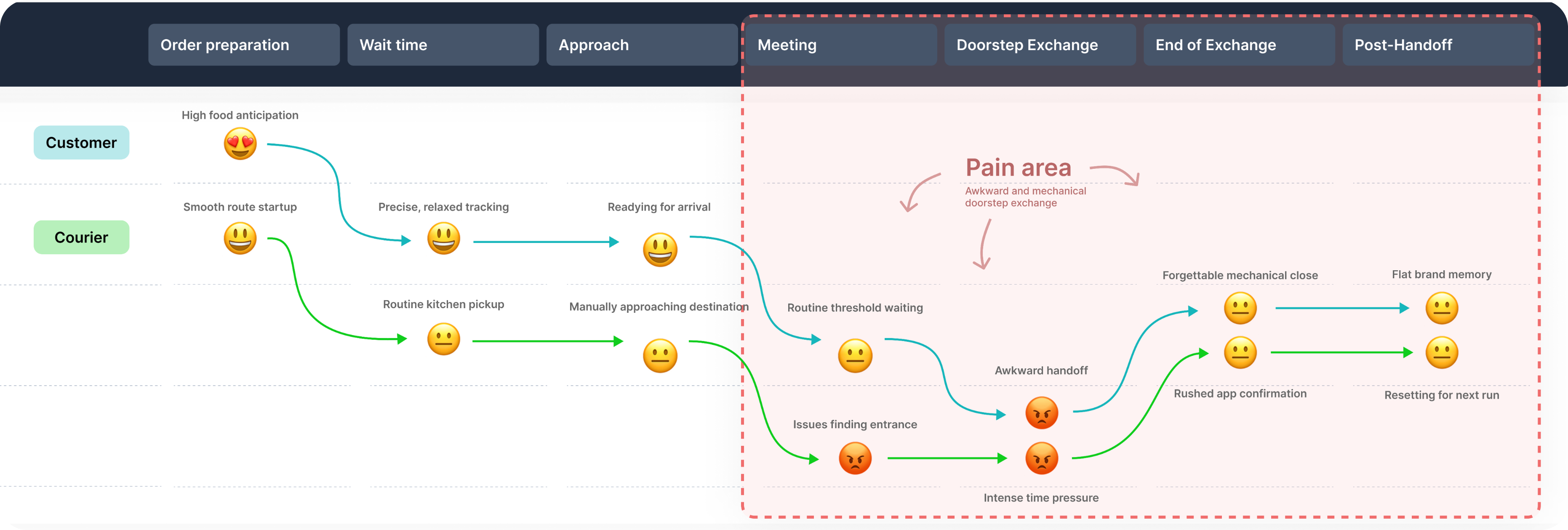
Mapping user emotional friction: The drastic drop-off during the threshold encounter and physical handover phase.
Figuring Out the Doorstep Dynamic
To truly understand what happens at the doorstep, the process started with deep field research combining quantitative surveys, courier interviews, and firsthand delivery trials. This fieldwork led to two core insights that shaped the entire solution:
Insight 1: Core Motivations of the Parties Are Clashing From the Beginning
Our discovery phase uncovered a massive misalignment between what the platform wanted to optimize and what users actually needed. While Bolt aimed to push for a more conversational “humanized experience,” our analysis showed that neither party was interested in forced social interactions because their fundamental baselines weren’t being met. Customers strictly required structural control and predictability, while couriers needed frictionless automation, route optimization, and operational speed. Because these foundational requirements were entirely unaligned, forcing an artificial social script failed in early trials. This realization completely pivoted our strategy: we had to design a flexible system where human connection is a natural byproduct of solving core logistical frustrations.
Insight 2: The Final Seconds Anchor the Entire Brand Memory
Mapping these behaviors against psychology brought a major breakthrough: the Peak-End Rule. We realized that the final fifteen seconds of the doorstep interaction act as the ultimate lasting impression; a mechanical or confusing drop-off completely tanked the memory of an otherwise flawless tracking experience. This realization pushed us to shift from simple utility to radical delight, focusing heavily on how to make this milestone genuinely memorable. It was this exact breakthrough that sparked our ideas for premium, high-fidelity micro-animations. We understood that to elevate the brand memory, we couldn’t just insert a random, functional checkmark screen or force an artificial interaction. We had to design an ending so fluid and visually enjoyable that both parties felt an organic desire to participate. By injecting a sense of premium craft into the interface, we aimed to transform a transactional necessity into an experience both customer and courier genuinely wanted to engage with.
The Solution
The finalized ecosystem resolves core handoff anxieties through three distinct, interconnected interface states that smooth out logistical friction and add emotional value to the exchange.
1. Find Each Other (Micro-Proximity Navigation)
To satisfy the courier’s non-negotiable need for speed and the customer’s need for predictability, this 2D compass-style interface shows real-time relative distance (e.g., “14m ahead”). By eliminating apartment entry confusion and language barriers right off the bat, it seamlessly handles the foundational logistical layer without disrupting the courier’s workflow.
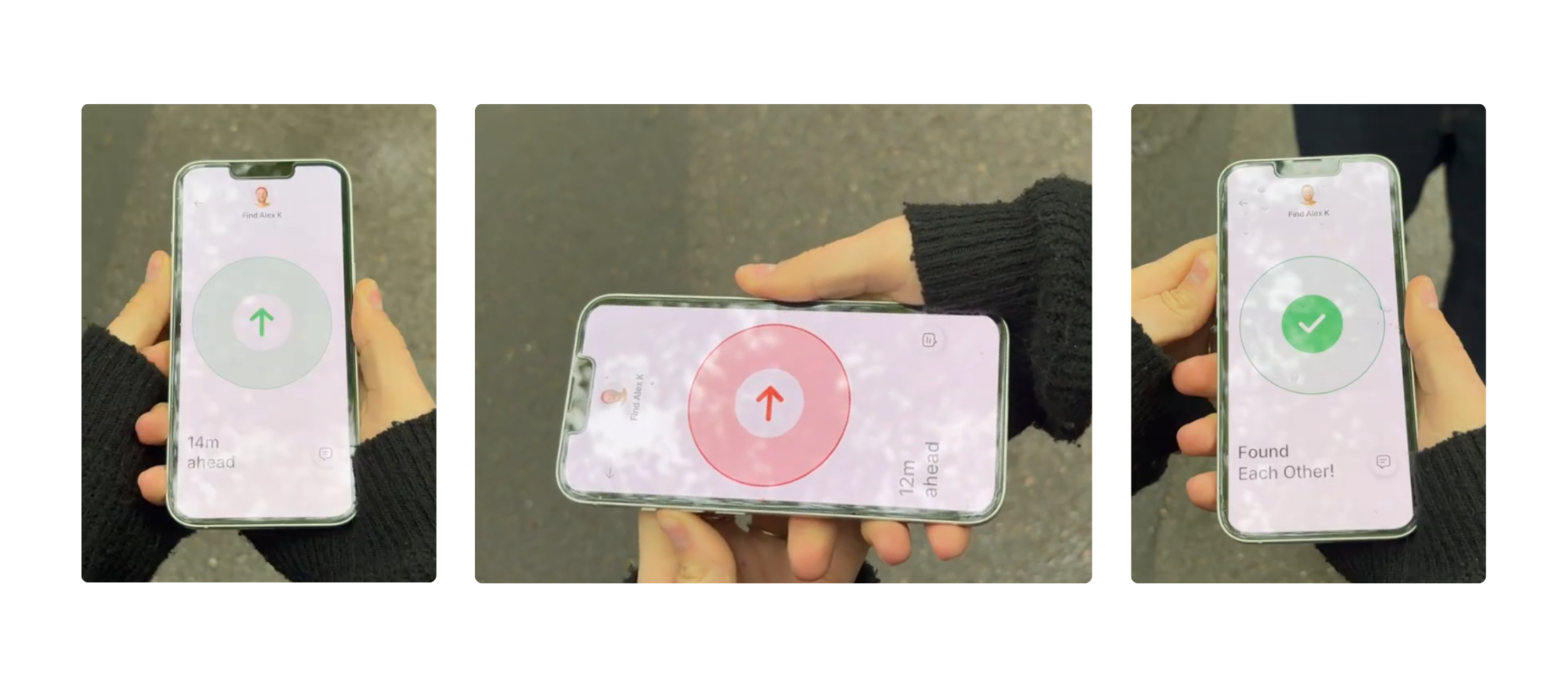
Dual-sided micro-proximity interface. Shared, real-time distance tracking that simultaneously guides both the courier and the customer toward each other.
2. Face-to-Face Tipping & The Digital Handshake
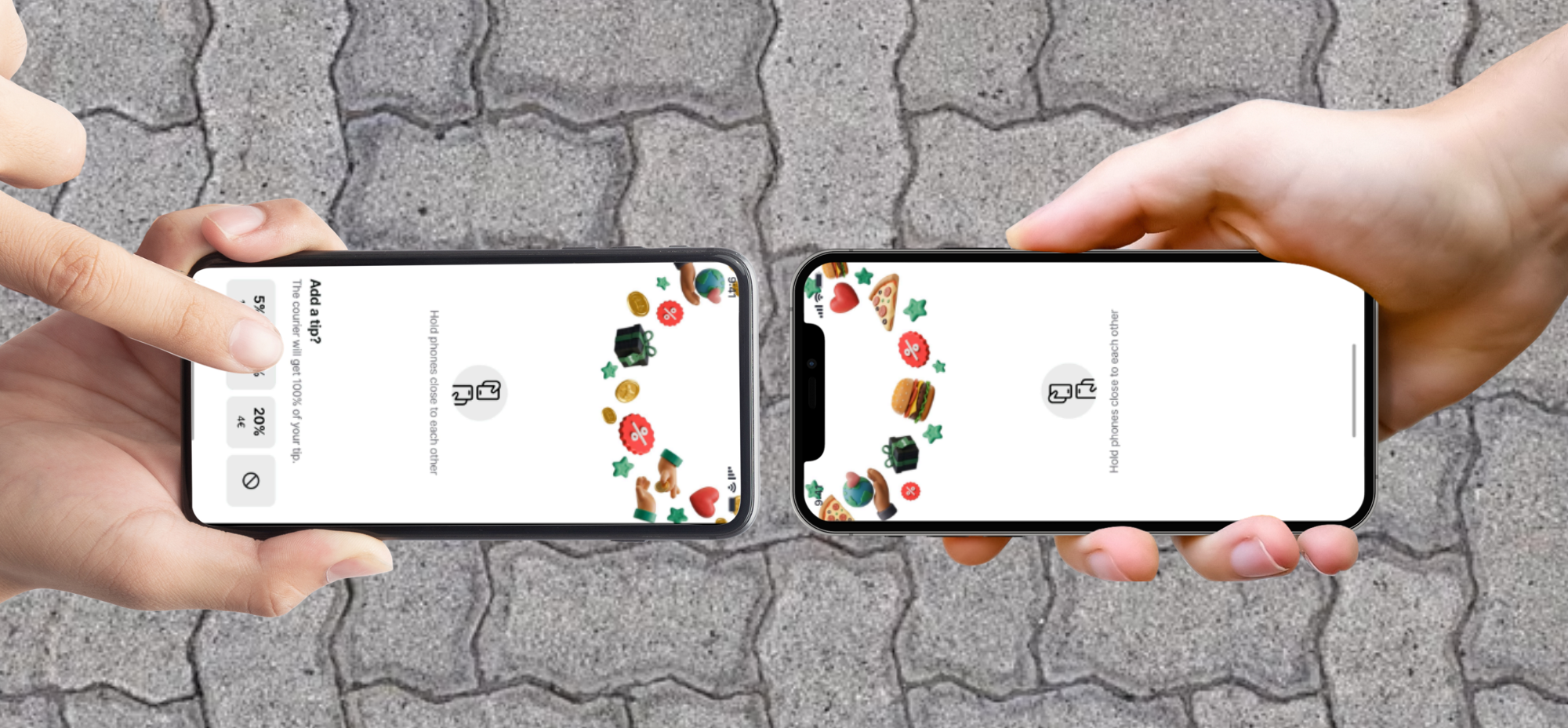
Once the baseline technical friction is removed by the proximity tools, both parties are naturally guided into a smooth, shared milestone. Rather than forcing a performance or an active social script, the Digital Handshake is completely passive and instantaneous. It triggers automatically through the proximity tracking as the two devices approach each other. This clean and effortless digital boundary establishes a secure and memorable closing ritual. By handling authentication invisibly, it safely humanizes the transaction, giving customers a comfortable window to easily express face-to-face gratitude or tip without adding extra digital steps or slowing the courier down.
Left: Customer tipping viewport | Right: Courier background confirmation display
3. The Adaptive Incentive Ecosystem
To engage users who normally wouldn’t care about a “branded ritual,” we introduced a dual-tab reward system. For families or fast-paced users, a secondary tab keeps high-utility platform discounts fully accessible. Meanwhile, to design responsibly and emphasize social impact over pure gamification, the primary tab highlights local community initiatives, giving every unique user profile a specific, low-pressure motivation to participate.
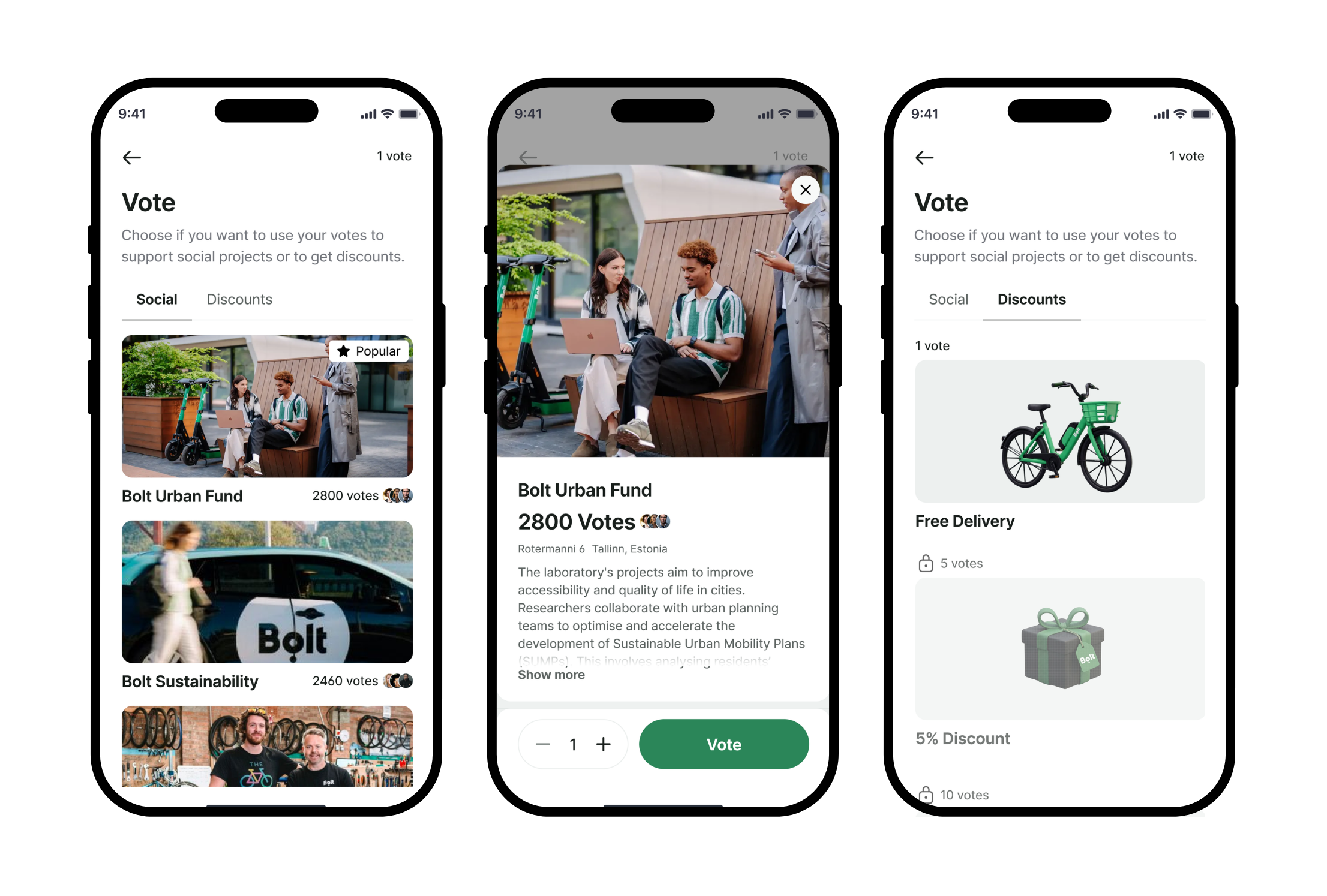
Dual-tab selection screen prioritizing local community voting over standardized platform discounts.
Outcome
By shifting focus from forced dialogue to frictionless interactions, this system preserves the courier’s critical requirement for speed and the customer’s non-negotiable need for operational control. Through the effortless proximity authentication, intentional premium animations, and a community-centered incentive model, the solution targets the friction of the physical handover. It successfully turns a historically mechanical, anxious transaction into an enjoyable closing ritual and shifts the peak-end impression from an abrupt drop-off to a memorable brand experience that promotes long-term customer retention.