

2026 · Hardware UX · Voice UI · AI
Memory Cassette: Tangible Storytelling for Dementia Patients
An interactive, screen-free audio device designed around familiar mechanical rituals to make personal storytelling playful, accessible, and inclusive for everyone.
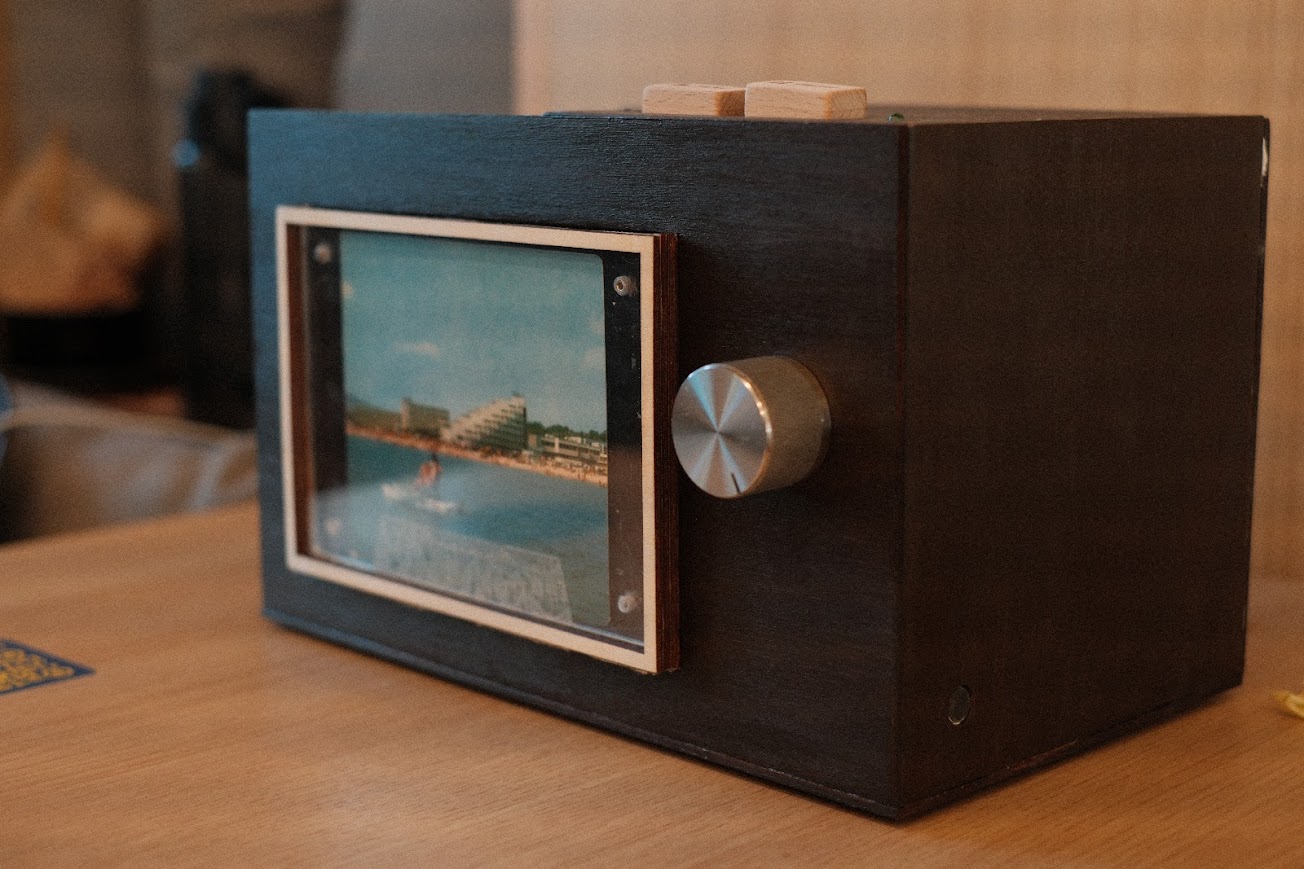
Challenge
Designing a screen-free, physical product for housebound dementia patients. Instead of a clinical tool, we wanted to build a purely recreational device that turns memory preservation into a lighthearted hobby.
Role
Collaborative team project. Hardware and Software Lead and UX designer.
Outcome
A working physical prototype: a cassette-loaded device where an LLM-driven interviewer gently prompts the user, stitching their responses into a lasting audio story.
Context
A main requirement from the start was that the device should be fun and easy for anyone to use. To do this, we shaped it like a well-known piece of classic audio equipment. We completely avoided complex digital menus, focusing instead on familiar mechanical forms that invite casual play rather than a clinical routine.
Why the Cassette Player?
We spent time playing with different tactile form factors, testing out old-school radio dials and the satisfying thunk of a vinyl player, before ultimately opting for the cassette format. We chose the cassette because it offers a perfect balance: the intimacy of audio storytelling paired with the fun physical ritual of inserting a tape and looking at a cover image. We pivoted away from technical manuals and complex software toward a human-centric hobby.
How it Works Behind the Scenes
We wanted the technology to feel completely invisible, so all the complex software and hardware steps happen smoothly in the background without the user ever realizing it.
- The Cassette Tag: Inside every physical cassette tape is a hidden digital tag. When a user drops a tape into the deck, a reader inside instantly scans it. This tells the system exactly who is talking and opens up their specific story chapter, like “beach trip with family” or “daughter’s birthday in 2014.”
- Press to Talk: When the user presses the mechanical record button, a small internal controller tells the central computer chip to start listening, instantly capturing their voice through a small microphone.
- The AI Companion: As soon as the user finishes talking, an AI conversational agent listens to the audio, and instantly comes up with a warm, friendly follow-up question. This helps the users make the stories even deeper and richer.
- Sharing the Audio: The AI’s written response is instantly turned back into a natural voice. The sound travels straight to a dual headphone port, letting two people listen along and enjoy the conversation together in real time.
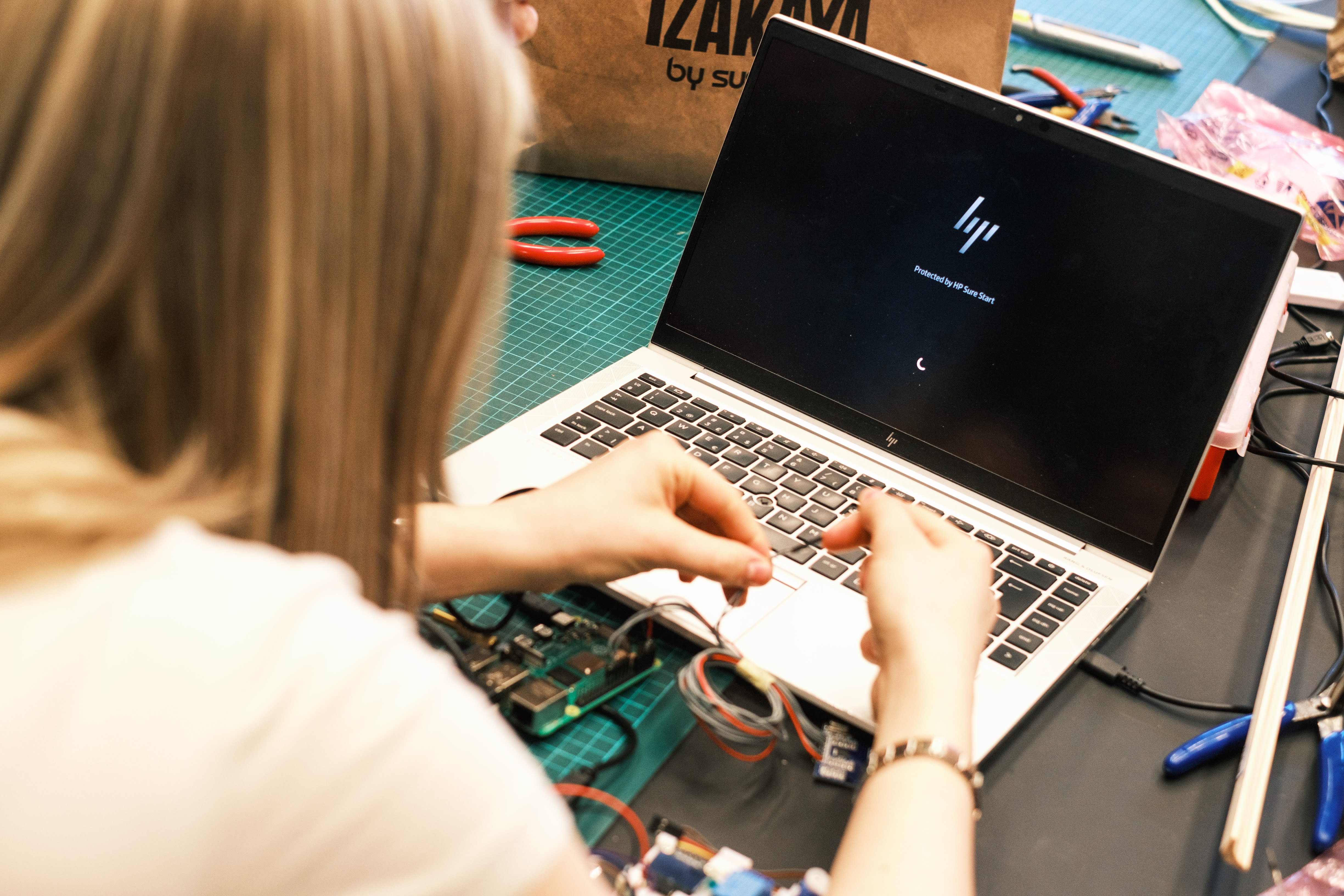
Building the physical prototype
Outcome
The physical prototype turns memory preservation into a warm, approachable product. By replacing complex software navigation with mechanical buttons, the device proves that keeping a legacy alive can be an inclusive and enjoyable part of daily life.
The final version ended up transcending its initial target demographic. During our exhibition, guests of all ages, including young people, told us they would love to have this object in their own homes just because it is a beautiful, nostalgic piece of hardware.
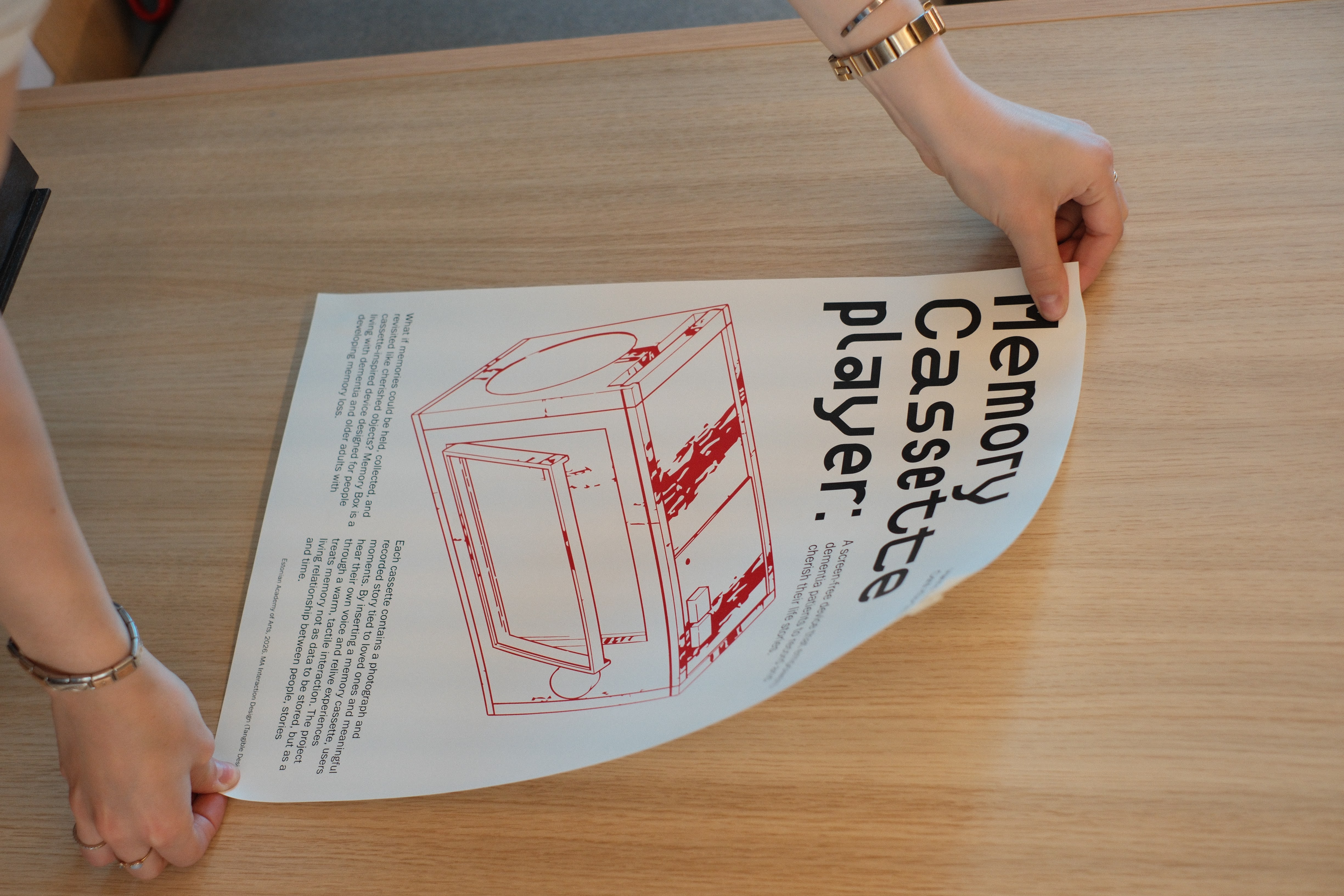
Setting up for the final exposition in Telliskivi