

2024 · Research · UX Design
Trajectory Viz: Simplifying Clinical Data
Turning complex patient treatment data into a clear, reliable path for clinical research.
Challenge
A cluttered interface created significant cognitive load, preventing researchers from efficiently drawing insights from treatment sequences.
Role
Lead UX Researcher & Designer for the interface redesign iteration.
Outcome
Optimized the dashboard structure to improve the speed and accuracy of data analysis.
Background
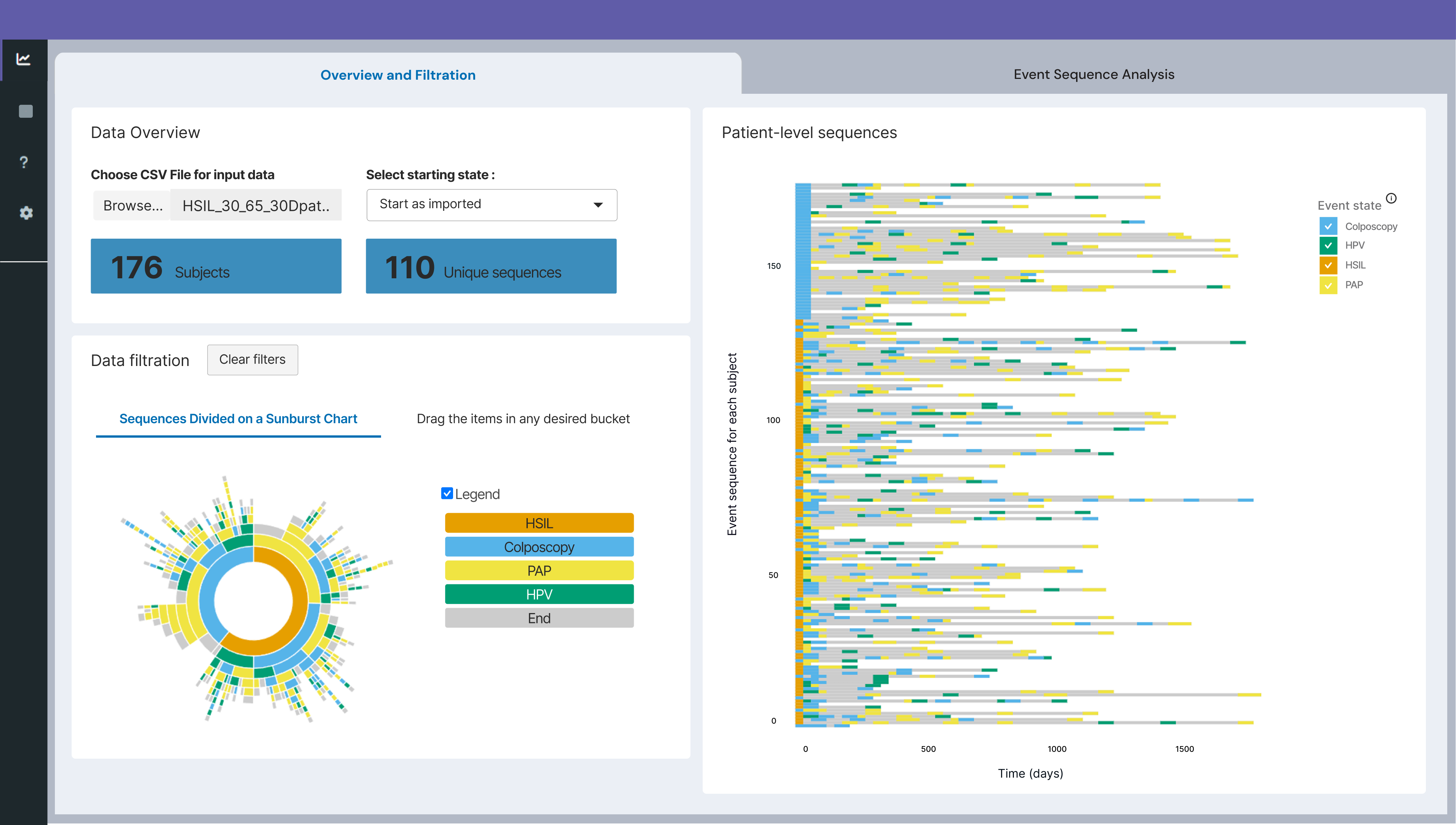
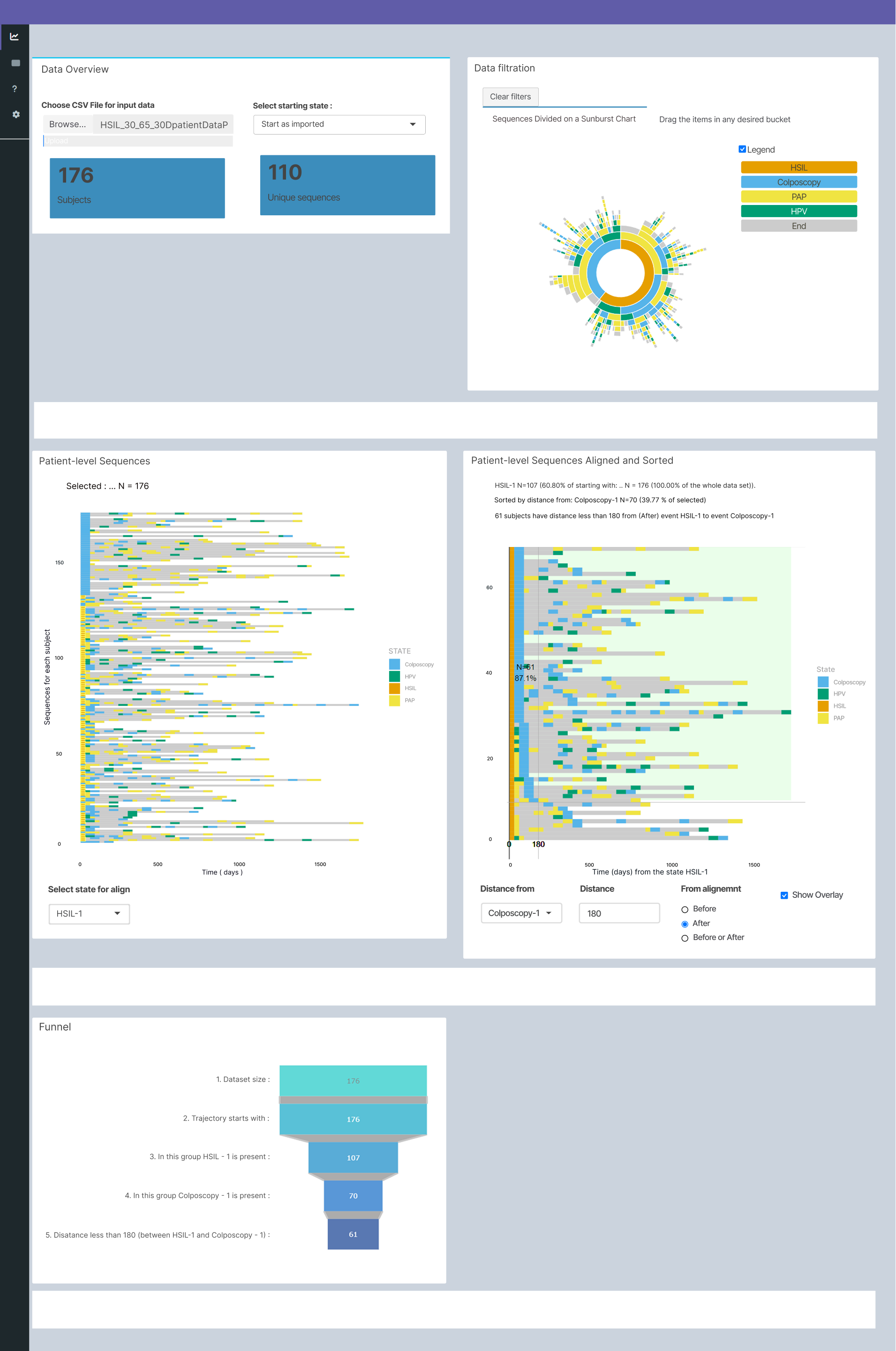
This project was completed as part of my Bachelor Thesis at Tartu University. Trajectory Viz is an R-based visualization tool originally designed by Pajusalu et al. to help clinical researchers track how patients respond to treatments over time. The original version was technically robust but visually overwhelming. Because every data point was visible at once, users struggled to distinguish between important medical events and secondary information. This made it difficult for researchers to interpret patterns, as the interface itself had become a barrier to the science.
The Redesign
My goal was to refine the information structure so the dashboard felt intuitive rather than technical.
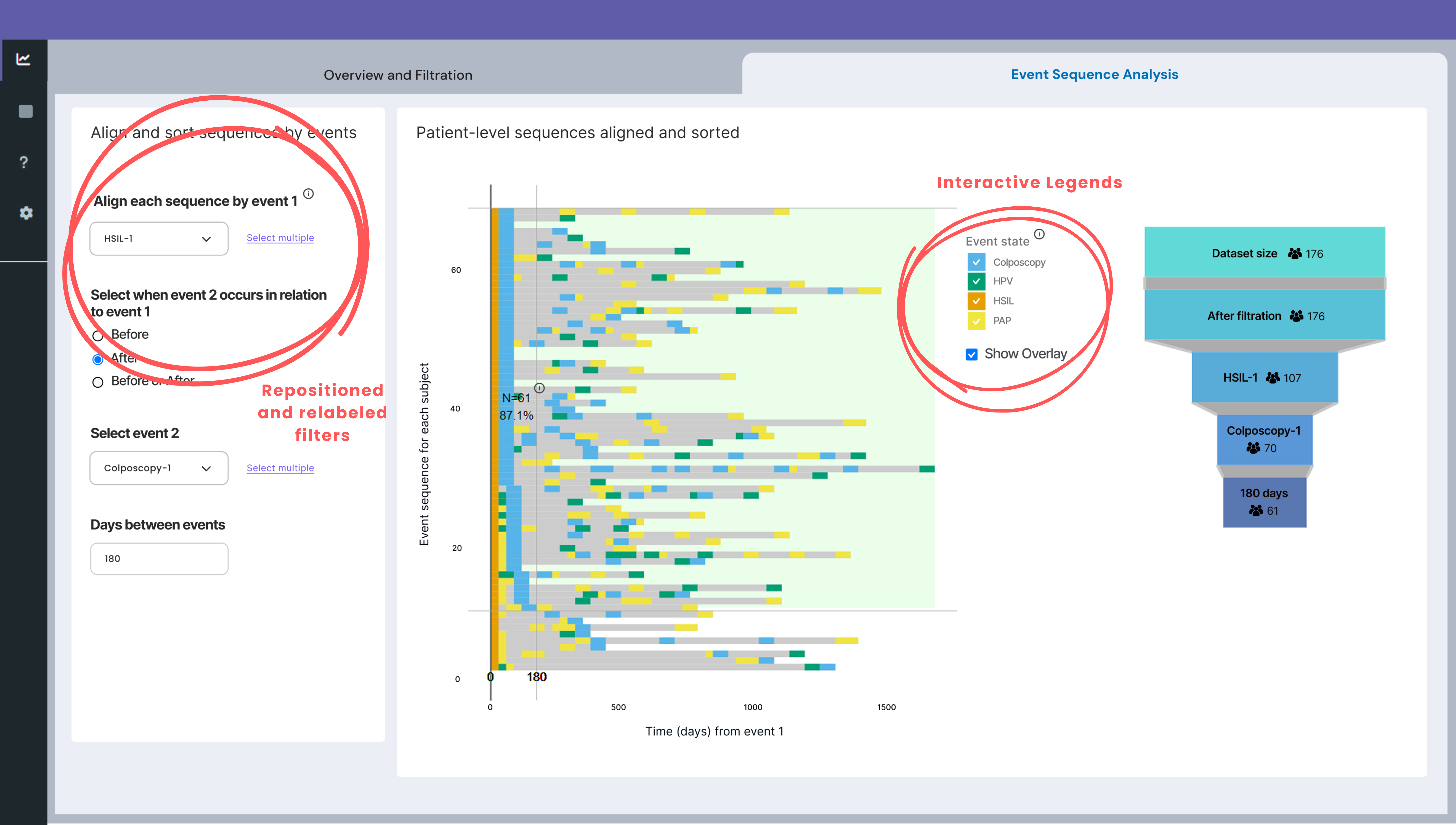
Information Architecture: I moved from a single, crowded page to a tabbed interface. This allows users to look at a high-level summary first, and then click into a deeper analysis view only when they need it.
Contextual Controls: I reorganized the filters and sorting buttons so they sit directly next to the charts they influence. This eliminates the need for users to hunt for controls or guess how a filter will change their view.
Semantic Clarity: I added short descriptions (tooltips) for complex variables to clarify what the data represents. This ensures that users—even those less familiar with the tool—can interpret the data with confidence.
Real-World Impact
The redesign moved the tool from a complex prototype to a practical dashboard. By cleaning up the visual hierarchy and simplifying how users filter information, we enabled researchers to identify treatment patterns much faster and with fewer errors.